
Why does reconstitution matter?
Lyophilised tirzepatide sits stable for months. Add solvent, and that changes fast. Koi Peptides Canada tirzepatide shelf life shrinks to weeks because aqueous conditions activate degradation chemistry that dry storage does not trigger. Peptide biochemistry is responsible for this property in solution.
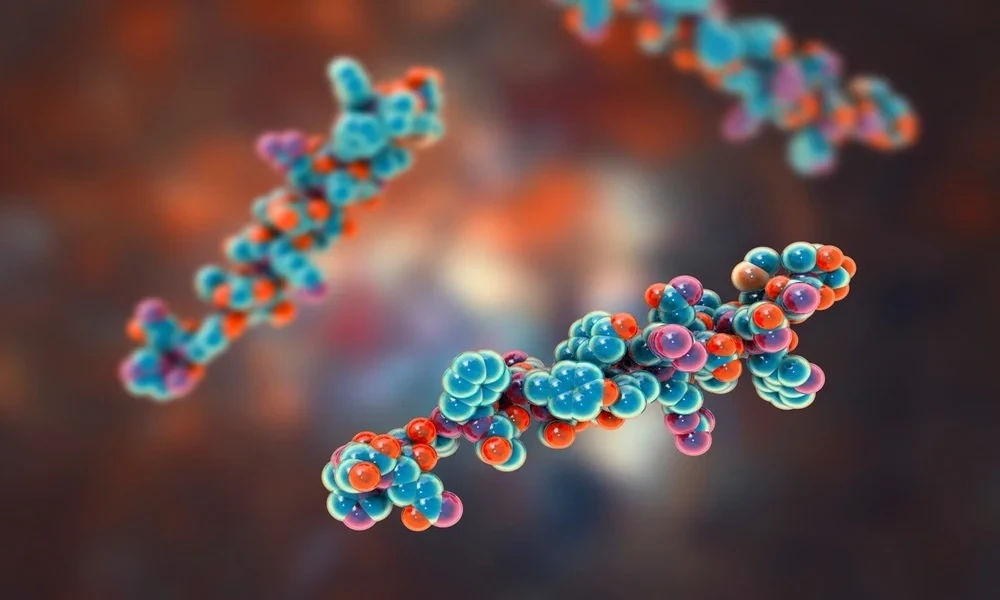
Tirzepatide is not a simple peptide. Its C18 fatty acid chain, attached via a linker to a lysine residue, creates albumin-binding capacity that defines much of its physiological behaviour. That same structural complexity introduces multiple degradation-prone sites once water enters the equation. Hydrolysis starts working on peptide bonds. Methionine residues become oxidation targets. Aggregation builds quietly, often with no change visible in the solution. As the benzyl alcohol in bacteriostatic water suppresses microbial activity considerably more than plain sterile water, the reconstituted peptide offers greater reliability as long as it remains usable. Solvent choice, storage temperature, and even container material each pull the degradation timeline in one direction or another.
What does refrigeration actually do?
Cold storage between 2°C and 8°C slows the chemistry. It does not stop it. Reconstituted tirzepatide held consistently within that range generally stays within an acceptable activity window of 28 to 30 days, based on observed degradation rates under controlled conditions. Beyond that point, receptor binding affinity may have already shifted even when the solution looks unchanged.
Two conditions shorten that window faster than most others. Temperature excursions outside the refrigerated band trigger hydrolytic breakdown that cold storage cannot reverse once it happens. The time-dependent aggregation caused by repeated freezing and thawing is also structurally permanent. A vial pulled in and out of a freezer across several uses will not hold potency the way one kept at steady refrigeration does.
Degradation runs deep
Deamidation at asparagine sites, methionine oxidation, and beta-elimination are not edge-case concerns. They are the standard chemical routes through which reconstituted tirzepatide loses integrity over time, and they proceed at refrigeration temperatures without any contamination or mishandling needed to set them off.
Visual inspection catches almost none of this. Solution clarity is not a potency indicator past a certain storage age. Molecular degradation advances well ahead of any cloudiness or colour shift becoming visible in the vial. Reconstitution date, not appearance, is the only reliable reference point for judging whether the peptide is still within its active window.
- Dissolved oxygen present in the solvent at reconstitution drives oxidation even inside sealed vials.
- Brief temperature variation during each vial access accumulates into meaningful aggregation risk across repeated use.
- Benzyl alcohol in bacteriostatic water targets microbial growth, not the underlying chemical degradation pathways.
Storage discipline matters
What happens between reconstitution and final use shapes how much activity remains at the end of the storage window. Every access introduces a small set of variables. Those variables compound.
Write the reconstitution date on the vial immediately, not from memory later.
- Use a fresh sterile needle each time without exception.
- Keep vials upright, away from any light source, including the refrigerator bulb, which is activated by frequent door opening.
- Where volume allows, aliquot into smaller portions to cut down on how often the primary vial is disturbed.
Reconstituting into a smaller volume at a higher concentration tends to preserve stability better than a dilute solution spread across a larger container. The chemistry sets the outer limit on shelf life. Everything after reconstitution either protects that limit or quietly erodes it before the peptide ever reaches the end of its window.