
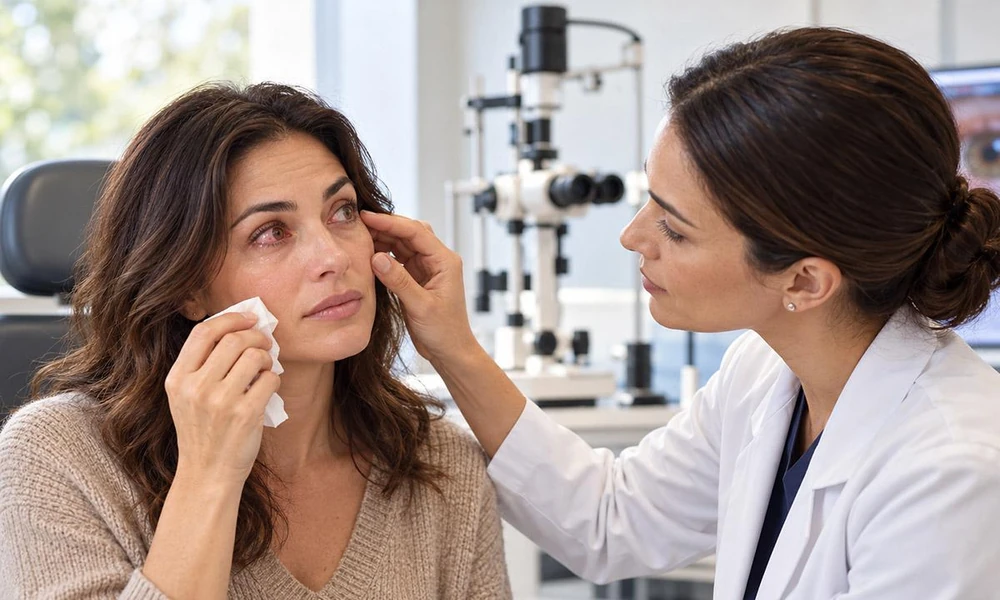
Itching usually points to allergies, while thick or sticky discharge usually points to an infection. Allergic pink eye is not contagious, but viral and bacterial pink eye is, so stay home until the redness and discharge clear. Call an eye doctor promptly for eye pain, light sensitivity, blurry vision, any red eye in a contact lens wearer, or any red eye in a newborn.
It’s 7 a.m. Your child shuffles into the kitchen with one red, watery eye, and school drop-off is in an hour. Is it contagious pink eye or just allergies acting up again? When it comes to pink eye vs. allergies, redness alone won’t give you the answer, but a few simple clues can point you in the right direction.
At Anaheim Eye Institute, we have cared for Orange County families since 1958, and red eyes are one of the most common concerns we hear about. This guide walks through the main signs of each condition, explains the contagion rules for school and work, and lists the symptoms that mean it’s time to get an eye exam rather than wait it out.
Pink Eye vs. Allergies: The Quick Answer
You usually can’t tell pink eye vs. allergies apart by redness alone. The most useful clue is itch versus discharge. According to the American Academy of Ophthalmology, allergies tend to cause strong itching with light, watery, or stringy discharge, while infections cause less itching and heavier discharge.
This rule is a starting point, not a diagnosis. Only an eye exam can confirm the cause.
What “Pink Eye” Actually Means
“Pink eye” is the everyday name for conjunctivitis. The conjunctiva is the thin, clear layer that covers the white of the eye and lines the inside of the eyelids. When it becomes inflamed, tiny blood vessels in it swell and give the eye its pink or red look.
The Three Main Types: Viral, Bacterial, and Allergic
Conjunctivitis has several causes, but three types account for most cases. Viral pink eye is caused by a virus, often the same kind that causes colds. Bacterial pink eye is caused by bacteria. Allergic conjunctivitis is the eye’s reaction to something like pollen or pet dander, and it is the only one of the three that does not spread from person to person.
Signs It’s Allergic Conjunctivitis
Allergic conjunctivitis usually brings intense itching, watery eyes, redness, and puffy eyelids. It typically affects both eyes at once and often shows up with sneezing or a runny nose. Symptoms tend to start soon after contact with a trigger, and they are uncomfortable but usually don’t harm the eye.
The American Academy of Allergy, Asthma and Immunology notes that eye allergies can also cause burning and tenderness. Because they are an immune reaction, not an infection, they are not contagious.
Common Triggers
The usual suspects are pollen, mold spores, pet dander, and dust mites. Avoiding the trigger is the first step when possible. Over-the-counter allergy eye drops or oral antihistamines may help with short-term relief, and an allergist can discuss prescription options or allergy shots if symptoms keep coming back.
Viral vs. Bacterial Pink Eye: What’s the Difference?
Viral pink eye usually causes burning, red eyes with watery discharge and often follows a cold. It is the most common type. Bacterial pink eye tends to produce a lot of thick, sticky discharge that can crust the lashes or glue the lids shut, especially after sleep. Both types spread easily.
The AAO’s overview of conjunctivitis adds that infected eyes can feel gritty, as if something is stuck in them. Many cases clear up on their own within one to two weeks.
Why Antibiotics Don’t Help Every Red Eye
Antibiotics fight bacteria. They do nothing against viruses or allergens. The AAO’s Choosing Wisely guidance on pink eye explains that since viral pink eye is the most common cause, many red eyes won’t improve with antibiotic drops. Unneeded antibiotics add cost and side effects, so the right diagnosis comes first.
Itching is the clue that usually points to allergies, while heavy discharge points to infection.
Is Pink Eye Contagious? School, Work, and Home Rules
Viral and bacterial pink eye are contagious. Allergic pink eye is not. The AAO advises staying home from school, work, or the gym with an infectious type until the eyes are no longer red and producing discharge. If allergies are the cause, it’s generally fine to keep up normal routines.
Many schools and daycares have their own pink eye policies, so check with them too. If you aren’t sure which type your child has, an exam can help.
Hygiene Steps That Stop the Spread
The CDC’s prevention tips focus on simple habits:
- Wash hands often with soap and water, and help young children do the same.
- Try not to touch or rub the eyes, which can spread infection to the other eye.
- Don’t share towels, pillowcases, makeup, eye drops, glasses, or contact lens supplies.
- Use separate eye products for an infected eye and a healthy one.
The CDC also notes that pink eye from allergens or irritants such as smoke or dust is not contagious.
Santa Ana Winds and Itchy Red Eyes in Orange County
Many Orange County residents notice their eyes flare up when the Santa Ana winds blow. Hot, dry gusts can carry dust, ash, and mold spores, and the dry air itself can leave eyes feeling scratchy and irritated.
In a 2018 LAist report on Santa Ana winds, a UCLA allergist explained that symptoms on windy days were an inflammatory reaction to irritant particles rather than true allergies. That helps explain why eyes can sting and redden even when pollen counts are low.
A few practical steps may help on windy days:
- Wear wraparound sunglasses outdoors to block blowing particles.
- Use preservative-free artificial tears to rinse and moisten the eyes.
- Keep windows closed and run the air conditioning on recirculate.
- Avoid rubbing your eyes, which can make irritation worse.
When a Red Eye Needs Prompt Care
Most red eyes are mild, but some symptoms are signs of a more serious problem. The AAO recommends seeing an eye doctor promptly if a red eye comes with any of the following:
- Moderate to severe eye pain
- Sensitivity to light
- Blurred vision or any change in vision
- Intense redness
- Symptoms that get worse instead of better, or last longer than one to two weeks
- A weakened immune system from a health condition or medication
Two groups need extra caution. The CDC advises that newborns with pink eye symptoms be seen by a doctor right away, because infections in the first weeks of life can be serious. Contact lens wearers, covered below, should also call promptly.
If you’re not sure what kind of eye professional to see, our guide to optometrists vs. ophthalmologists explains how their roles differ.
A Special Warning for Contact Lens Wearers
If you wear contacts and develop a red, painful, or light-sensitive eye, take your lenses out and call your eye doctor. Contact lens wear raises the risk of keratitis, an infection of the cornea (the clear front window of the eye) that can look like pink eye at first. Learn more in our article on bacterial keratitis causes, symptoms and treatment.
The AAO advises not wearing contacts until the infection is gone. It also suggests throwing away disposable lenses and eye products used since symptoms began.
Eye pain, blurry vision, or light sensitivity are signs to see an eye doctor promptly.
How Eye Doctors Diagnose and Treat a Red Eye
An eye doctor starts by asking about your symptoms, recent colds, allergies, and contact lens use. They then examine the eye with a slit lamp, a microscope that uses a bright, focused light to show the surface of the eye in detail. Our overview of what happens during a comprehensive eye exam explains what to expect.
Treatment depends on the cause:
- Viral: usually supportive care, such as cool compresses and lubricating drops, while the virus resolves.
- Bacterial: your doctor may prescribe antibiotic drops or ointment.
- Allergic: avoid triggers plus allergy eye drops or other medications your doctor recommends.
Sometimes the cause isn’t infection or allergy at all. Dry eye can cause redness, burning, and a gritty feeling that mimics both. If your symptoms keep coming back, our guide to dry eye causes and symptoms may help you prepare questions for your doctor.
Pink Eye vs. Allergies: Key Takeaways
When you’re sorting out pink eye vs. allergies, remember the simple pattern: itching suggests allergies, while thick discharge suggests infection. Allergic pink eye isn’t contagious, but viral and bacterial types are, so keep good hygiene habits until symptoms clear. Above all, eye pain, light sensitivity, vision changes, contact lens wear, and any red eye in a newborn are reasons to call a doctor rather than wait.
If you’re dealing with red, irritated eyes that won’t settle down, an exam can bring clarity and peace of mind. You can also read what to expect at your first visit to Anaheim Eye Institute.
Have questions about your vision or ready to explore your options? The team at Anaheim Eye Institute has been helping Orange County patients see clearly since 1958.
Book an Appointment or call 714.533.2020.
Medical disclaimer: This article is for informational purposes only and is not a substitute for professional medical advice. Please consult your eye doctor for a personal diagnosis or treatment.
Frequently Asked Questions
How can I tell if my child’s pink eye is contagious?
A pink eye with thick, sticky, or heavy discharge, often after a cold, is more likely to be viral or bacterial and contagious. Strong itching with watery eyes in both eyes, plus sneezing, points more toward allergies, which are not contagious. Because the signs can overlap, an eye exam is the best way to know for sure.
Can allergies cause pink eye in only one eye?
Allergic conjunctivitis usually affects both eyes at the same time. Redness in one eye doesn’t rule out allergies, but it can also indicate infection or another eye problem. If only one eye is red, painful, or producing discharge, it’s a sensible idea to have it checked.
How long does viral pink eye last?
Many cases of pink eye, including viral pink eye, clear up on their own in one to two weeks. Cool compresses and lubricating drops can ease discomfort in the meantime. If symptoms last longer or get worse, see an eye doctor.
Should I wear contact lenses if I have pink eye?
No. Take your contacts out and don’t wear them again until your eye doctor says the infection is gone. Throw away disposable lenses and any eye products used since symptoms began, and call your eye doctor promptly if you have pain or light sensitivity.
Can dry eye be mistaken for pink eye or allergies?
Yes. Dry eye can cause redness, burning, and a gritty feeling that resembles both pink eye and allergies. Unlike infectious pink eye, it is not contagious, and it often lingers or comes back over time. An eye doctor can examine your eyes to find the cause and suggest treatment options.